
You back out from under a house on your elbows, stand up blinking in the daylight, peel a glove off, and check your phone. Two missed calls. Zero voicemails.
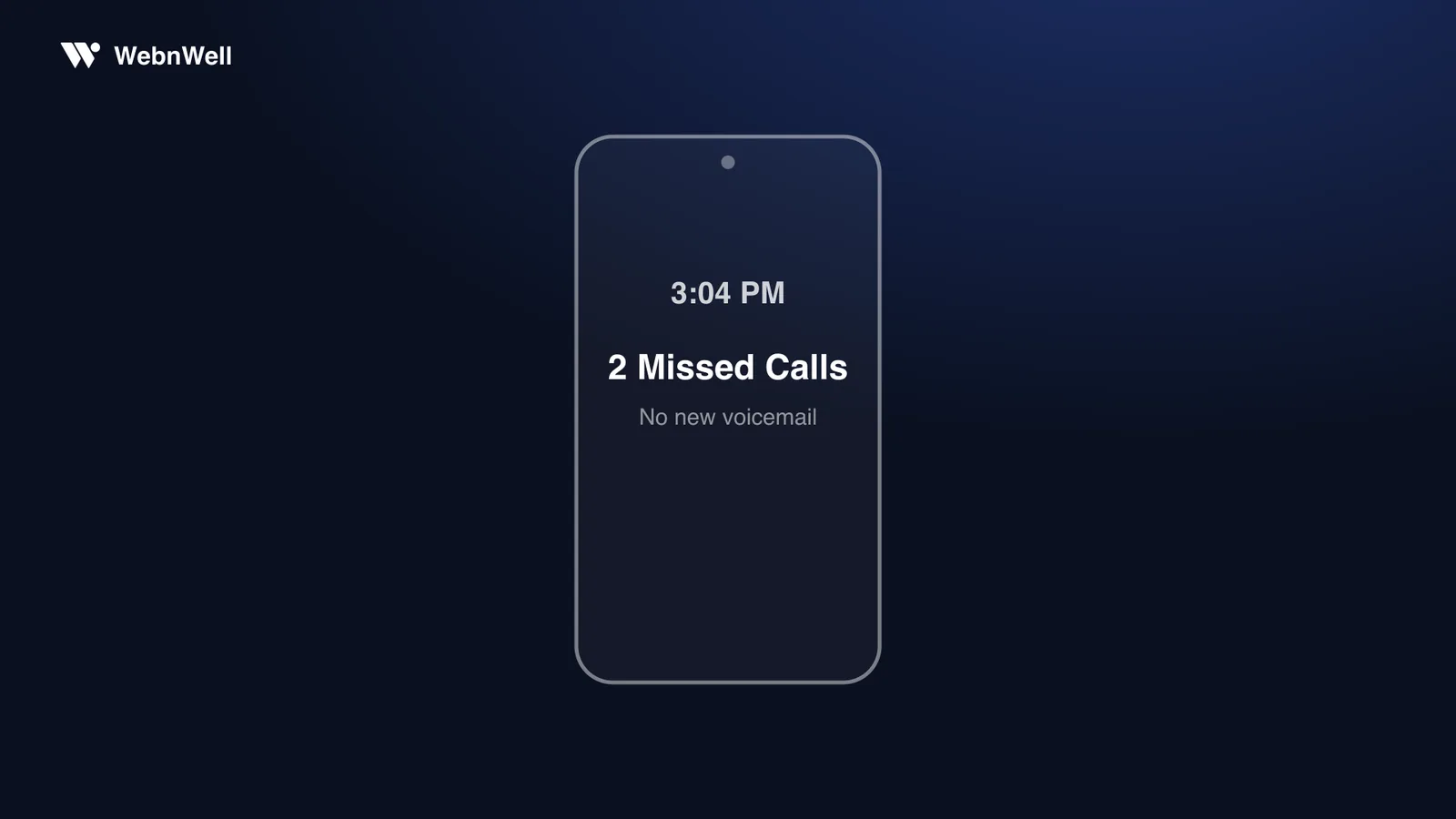
Most contractors shrug at that screen. No message means it wasn’t important: wrong number, robocall, a supplier who’ll try again. Back under the house.
I want to talk you out of that shrug. I’m Monzurul, and my agency specializes in lead generation for foundation and waterproofing contractors; the missed-call problem comes up in nearly every conversation I have with an owner who runs his own estimates. The pattern never changes: good ads or a good reputation gets the phone ringing, and then the phone rings out because the only person who can answer it is under a house. This piece walks through what happened during those two rings, what misses like that add up to over a year, and the unglamorous fix, missed-call text back, shown from the homeowner’s side of the screen.
Why didn’t they leave a voicemail?
Follow that call from her end of the line. She noticed a crack above the door frame a month ago and told herself it was settling. Last night it rained hard, and this morning there’s a dark line of water along the basement wall. She’s spent forty-five minutes on her phone convincing herself the house is sinking. It probably isn’t. Fear doesn’t read disclaimers.
She searches “foundation repair near me.” She opens three or four companies. One of them is you, maybe through an ad you paid for, maybe through reviews you spent ten years earning. She taps your number.
It rings out.
Here’s the moment that decides everything: does she leave a voicemail?
She does not. A voicemail doesn’t stop the water. A voicemail is a message in a bottle, and she needs a lifeboat. She goes back to her list and dials the next company. Someone answers. That someone is standing in her basement tomorrow with a flashlight and a clipboard, and you will never know her call existed.

A homeowner with water in her basement isn’t screening companies. She’s racing, and the race is against the next name on her list.
None of this makes her flaky. It’s how every one of us shops when we’re worried: we keep going until a human responds. I’ve broken down elsewhere how often the job simply goes to whoever responds first, and a missed call is the harshest version of that race, because unlike a web form, it leaves nothing behind. No email to answer late. No name to call back. The lead doesn’t cool off. It evaporates.
Count what a missed call really costs
“Missed calls are bad” is easy to nod at and ignore. Numbers are harder to shake off, so let’s build some. Fair warning: the middle column below is invented (a hypothetical contractor whose average job runs $9,500) and it exists only as scaffolding. The blank column on the right, filled in with your own call log, is the one that matters.
| Line | Example | Your number |
|---|---|---|
| Average job value | $9,500 | |
| Missed calls last week, during working hours | 5 | |
| Of those, real homeowners (honest count) | 2 | |
| Real missed calls per year (× 50 weeks) | ~100 | |
| Close rate on homeowners you get on the phone | 1 in 3 | |
| Jobs that never got the chance to say yes | ~33 a year | |
| Revenue that dialed the next name | ~$313,500 |
Push back on that number. You should. Some of those callers were price-shoppers. Some would’ve hired the franchise anyway. Some had a $400 hairline crack, not a pier job. Fine: cut the final line in half. Cut it in half again. You’re still staring at a serious figure, for calls that already happened, from people who had already chosen to dial you.
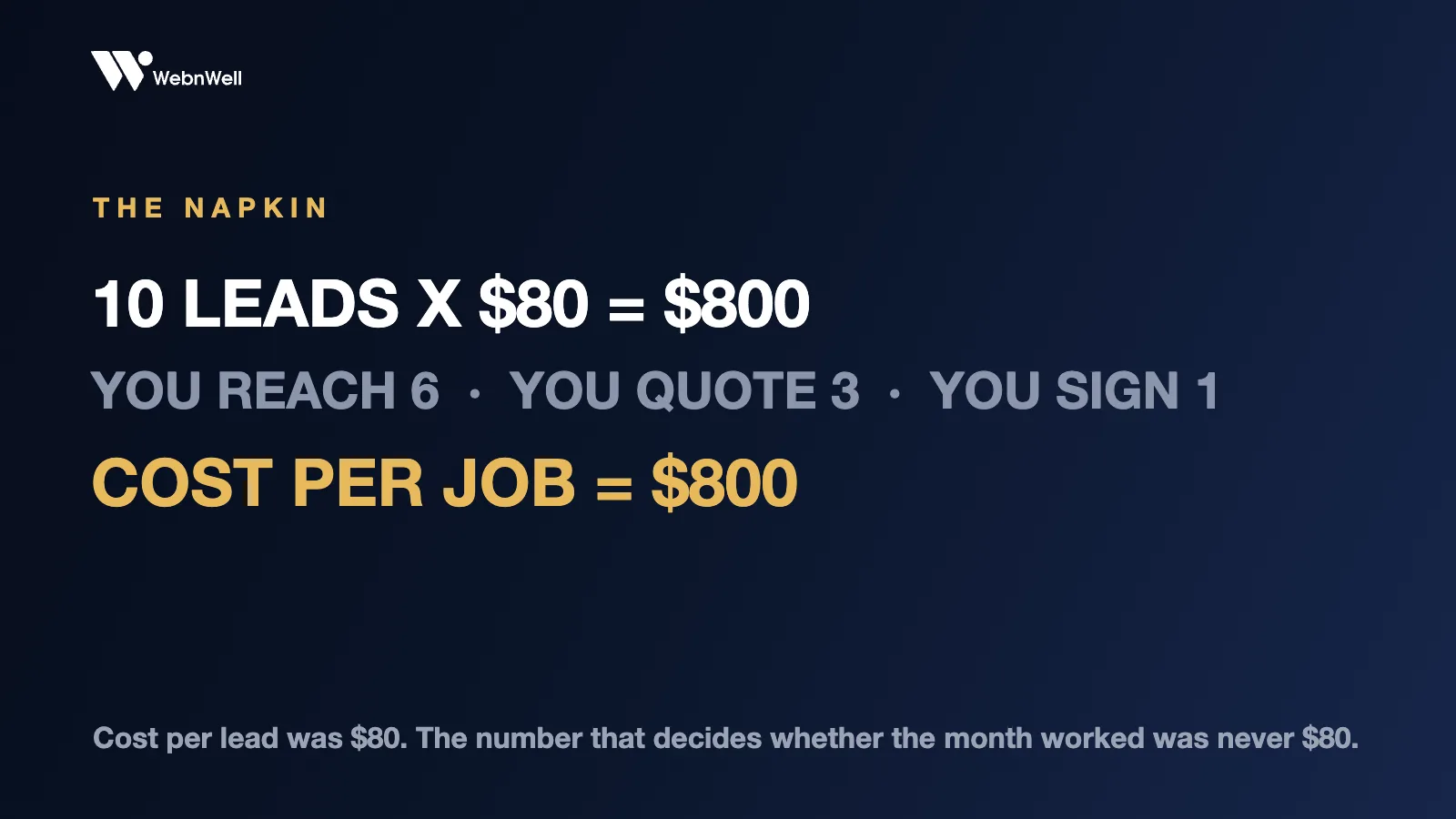
And one detail turns it from painful to absurd: you paid for those calls before they rang. If the call came from an ad click in a competitive trade, that click wasn’t cheap; we broke down what clicks really cost in the budget napkin. If it came from a lead platform, you likely paid a three-figure fee for that one phone number. If it came from your reputation, it cost years. Whatever the source, the bill was settled before the phone ever buzzed in your pocket.

The missed call costs more than the job. You already paid for the click that made the phone ring.
What missed-call text back looks like from the homeowner’s side
The fix has a clumsy name and a simple job: when a call rings out, your system automatically sends the caller a text. Within seconds. Every time.
Watch the same scene again, through her eyes this time. She calls you. Six rings, no answer. Her thumb is already heading back to the search results when her phone buzzes:
“Hi, this is the team at Smith Foundation Repair. Sorry we missed you, we’re under a house right now. Reply here and a real person will get back to you, or grab an inspection time that works for you: [booking link]”
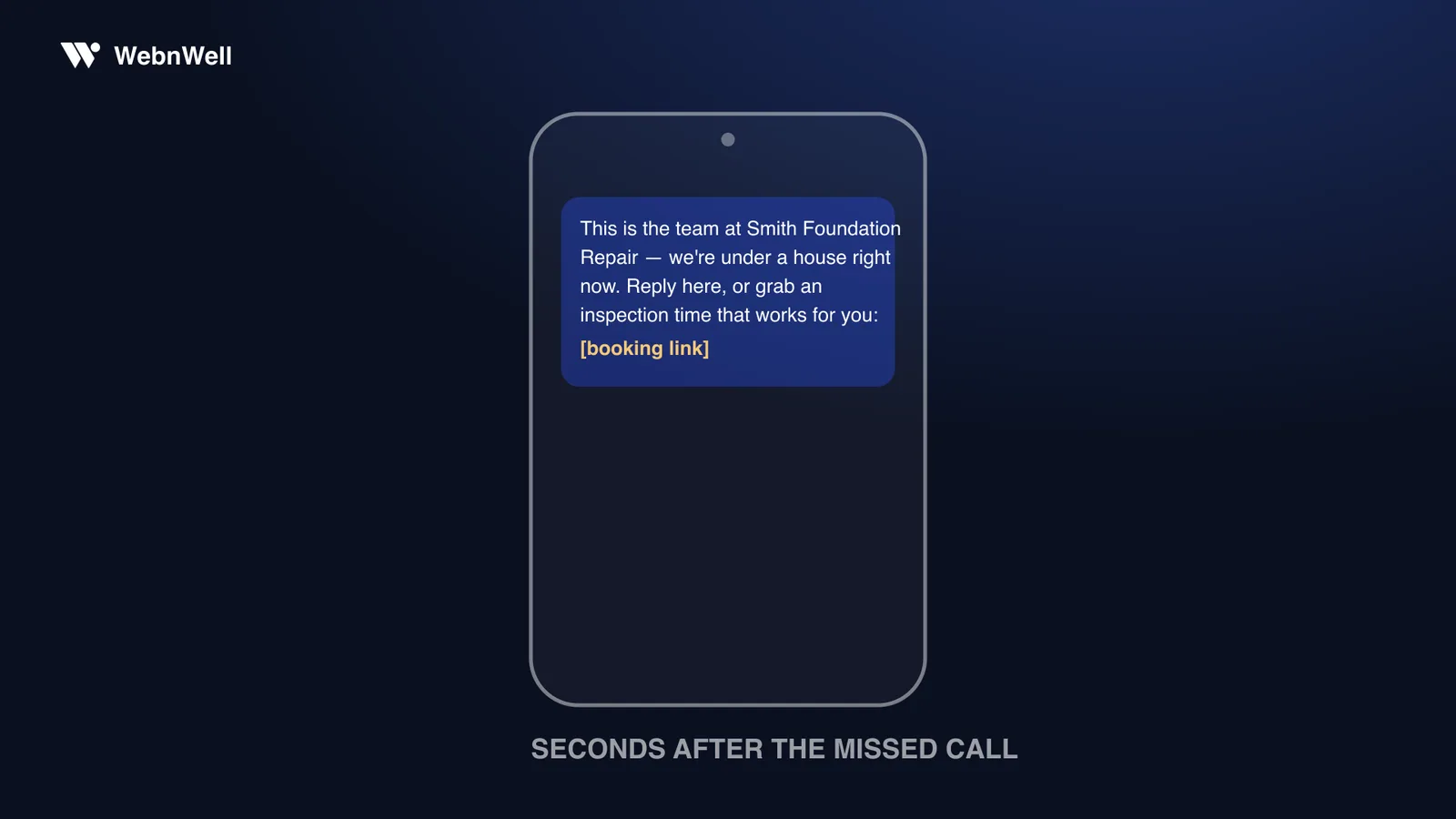
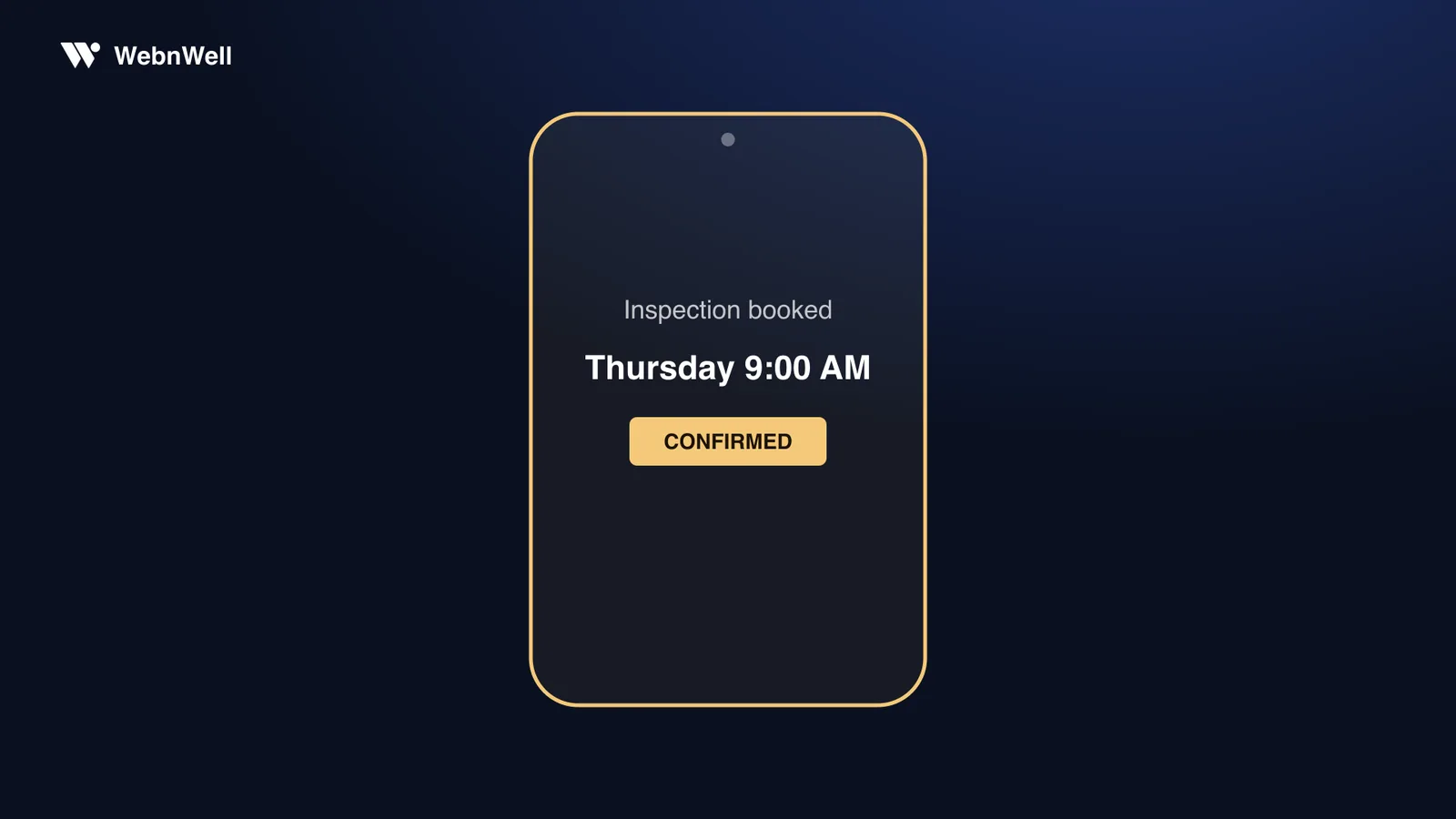
She stops. Somebody answered. Not with a voice, but answered. She taps the link, sees Thursday at 9:00 open, and books it. The dialing stops. The race is over, and you won it from a crawl space, wearing a headlamp, without knowing it was happening.
Nothing about you changed. You didn’t hire an office manager. You didn’t start answering faster. The system held the door open until you could walk through it.
The message matters more than the software
Plenty of tools can send the text — your phone system, a CRM, the platform we set up for clients. The words decide whether it works. A few rules we’ve settled on:
- Sound like a company run by humans. “We’re under a house right now” beats “Your call is important to us” every single time. It’s true, it’s specific, and, oddly, the miss becomes proof you’re busy. Busy reads as good.
- One clear next step. Reply here, or book a time. Not five links. Not “visit our website.” Not a survey.
- Seconds, not minutes. She’s mid-dial to your competitor. A text that lands ten minutes later lands after the race has been run.
- A real reply has to follow. If she answers the text and gets silence, you’ve now missed her twice. Someone (you at the next break, a spouse, an answering service) has to pick up the thread.
The booking link is the whole trick
The text alone buys you a pause. The booking link converts it. Without the link, “we’ll get back to you” still leaves her holding the fear, nothing on the calendar, nothing to wait for. So she keeps dialing, just in case. With it, she can do the thing she picked up the phone to do: put a person and a date against the problem. That’s all she wanted. The link hands it to her without needing you.
Isn’t texting people pushy?
Not here. She called you, sixty seconds ago, about something she’s scared of. A reply text is exactly what she’s hoping for. The pushy version of this story is the status quo, where she has to call four companies to get one response. This isn’t cold outreach. It’s finishing a conversation she started.
One patch doesn’t fix the whole pipe
I’d be selling you short if I framed text-back as the whole answer. It patches one leak, a big one, but a lead pipeline has several, and they compound. Ads bringing clicks from window-shoppers and DIYers. A website that loses visitors before they find the phone number. Quotes that go out and never get a follow-up. Text-back rescues the callers you’d have lost; it can’t do anything about the callers you never earned.
That’s why, when we build lead generation for a contractor, the follow-up gets wired in alongside the ads, not bolted on after. An exclusive lead you miss is just an expensive missed call with better paperwork.
There’s a quieter benefit too. Once every missed call triggers a text, every missed call leaves a record. Most owners honestly don’t know how many calls they lose; the phone log undercounts, and memory undercounts worse. Pacific Rigging Loft is my favorite illustration: within the opening week of running their account, the phone tracking had already logged somewhere near 25 calls. Calls that, a week earlier, existed nowhere except the owner’s fuzzy recollection.
You can’t fix the calls you can’t see. Text-back rescues the lead and leaves a paper trail. Both halves matter.
The thirty-day missed-call audit
Fifteen minutes, your phone, maybe a beer.
- Open your call log: your phone, plus your ad platform’s call reporting if you run ads. Go back thirty days.
- Count every missed call during working hours. Not the 2am robocalls. The Tuesday-at-3pm ones.
- Sort them honestly. Suppliers, spam, and wrong numbers go out. Unknown local numbers that never called back stay in. Those are the ones that sting.
- Multiply. Real missed calls × your close rate × your average job value. The table above is your template.
- Decide. If the number’s small, you’ve got coverage most owner-operators don’t. Well done. If it isn’t small, you now know exactly what a day of setup is worth.
Time your own funnel
Want the stopwatch work done for you? The free market audit starts exactly there, with how long a caller currently waits to hear back from you, because until that number is known, no ad tweak or website fix means much. You’ll also get a recorded look at your service area: what foundation clicks cost, who answers fastest right now, and where the leaks are.