
Two o’clock on a Tuesday. Your phone buzzes against your leg while you’re halfway through setting a support post. New lead. Foundation crack, finished basement, homeowner wants an estimate this week. A real job, by the sound of it.

You finish what your hands are doing, climb out, find a spot with signal, and call back at 2:20. Twenty minutes. By jobsite standards, that’s fast.
She’s polite about it. “Oh, thanks for calling back. Someone’s already coming out tomorrow.”
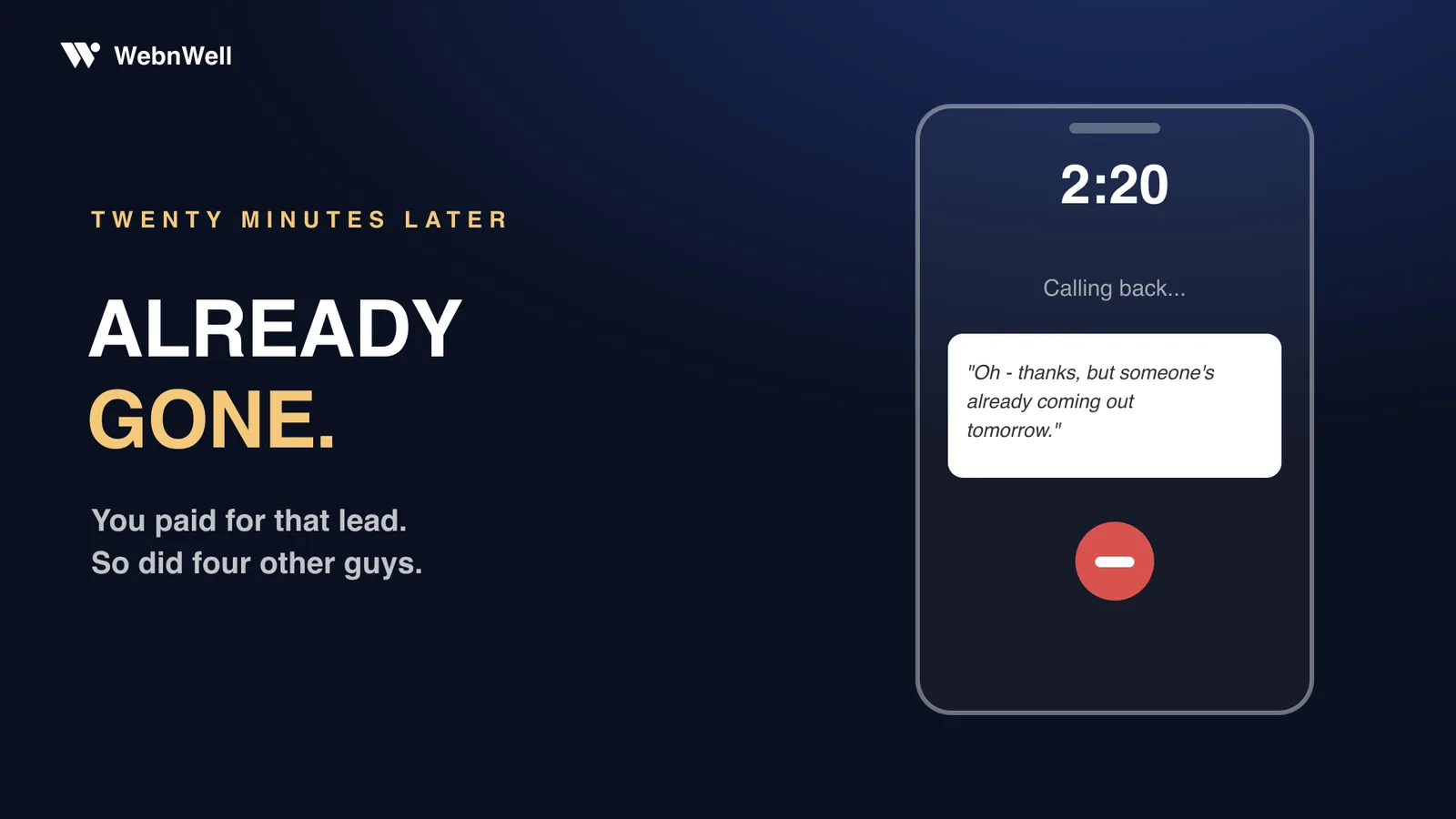
You paid for that lead. So did four other guys. One of them was sitting at a desk when it landed, and twenty minutes was all it took for your money to turn into his appointment.
If you’re researching what foundation repair leads cost, I’d guess you’ve either lived some version of that call or you’re about to. So let’s answer the price question properly: sticker prices first, then the math that decides whether buying leads makes you money. I’m Monzurul Hasan, Business Lead at WebnWell; we’ve run 1,400+ campaigns for local service businesses, plenty of them for contractors in trades a lot like yours. What follows is the conversation I’d have with you across a kitchen table.
Prefer to watch instead of read? This whole article is also a 6-minute video:
The sticker price, before the fine print
First, one term so we’re talking about the same thing: a lead is just a homeowner’s name, phone number, and problem. Someone who raised their hand and said “I might need this fixed.” A lead vendor is a company that collects those homeowners on its own website and sells their information to contractors like you.
Lead vendors, the companies that text you homeowner inquiries, commonly charge somewhere between $80 and $150 a lead for foundation work. That’s an observed market range, not a law of physics: a small-market waterproofing inquiry sits near the bottom, a structural inquiry in a busy metro pushes past the top, and pricing moves whenever the vendors decide it should.
Exclusive leads generated by your own advertising don’t come with a menu price. They cost whatever your market’s clicks cost, divided by how well your page turns visitors into calls. Usually that’s more per lead than the shared sticker price. In the example I’ll walk through below, it’s double.
Which sounds like the shared lead wins. It doesn’t, and the rest of this article is why.
The sticker price of a lead tells you almost nothing. What you’re actually buying is a place in line — and with a shared lead, there are four other guys in it.
Why would a lead vendor sell the same homeowner five times?
Because the math tells them to.
Follow the money for a second. The homeowner never filled out your form. She searched for foundation repair, clicked an ad (often one dressed up to look like a local company), and typed her problem into the lead vendor’s form, on the lead vendor’s website. That form is the vendor’s product. They spent real advertising money to capture it, and they get that money back by selling it. Sell it once, they make one sale. Sell it to five contractors at $100 apiece and the same form brings in $500.
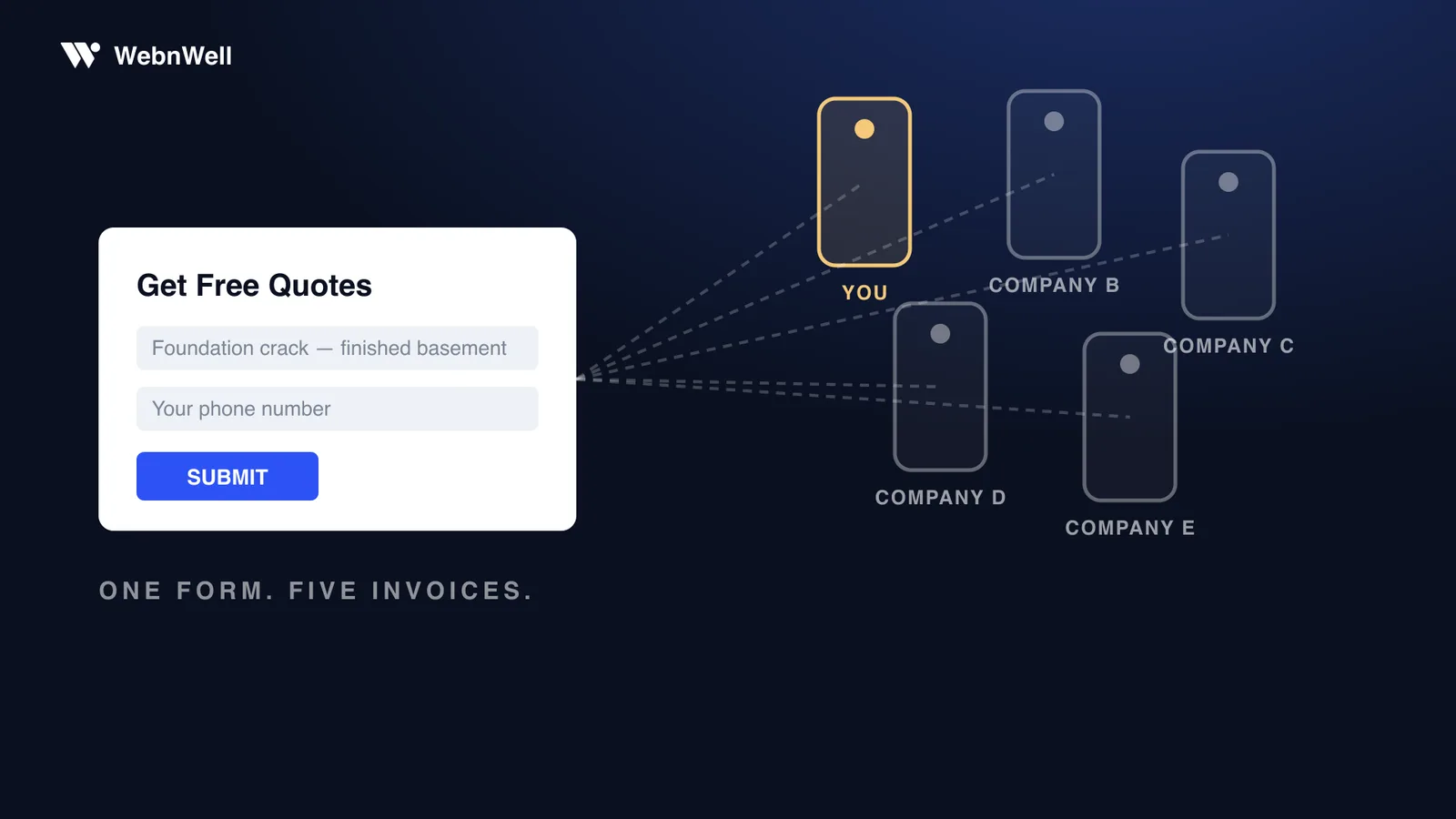
They’re not going to sell it once. The number they care about is money made per form. The number you care about is signed jobs. Those two numbers aren’t on the same team.
The race, from her side of the phone
Now stand in the homeowner’s kitchen. There’s a crack in her foundation wall and she’s imagining the whole house sliding. She fills out one form because the form said “get quotes,” and soon her phone starts ringing. Strangers, one after another, all saying versions of the same thing.
She’s not comparing companies line by line. She’s scared, and she books the first one that sounds like it knows what it’s doing, because booking someone feels like the problem is being handled. Every callback after that is noise. Yours included.
That is the part shared-lead pricing never shows you: the product is a race, and the race is decided in minutes. With shared leads, calling back fast isn’t a nice-to-have; it’s the whole game. And the game is rigged against the owner who does the work himself. A franchise call center picks up fast, every time. You’re under a house with a flashlight in your teeth. Fair or not, that’s how it works.
The number that matters is cost per signed job
Here’s the math the sticker price is hoping you never do. Every number below is an example. A realistic one, but the point is the method. Swap in your own figures.
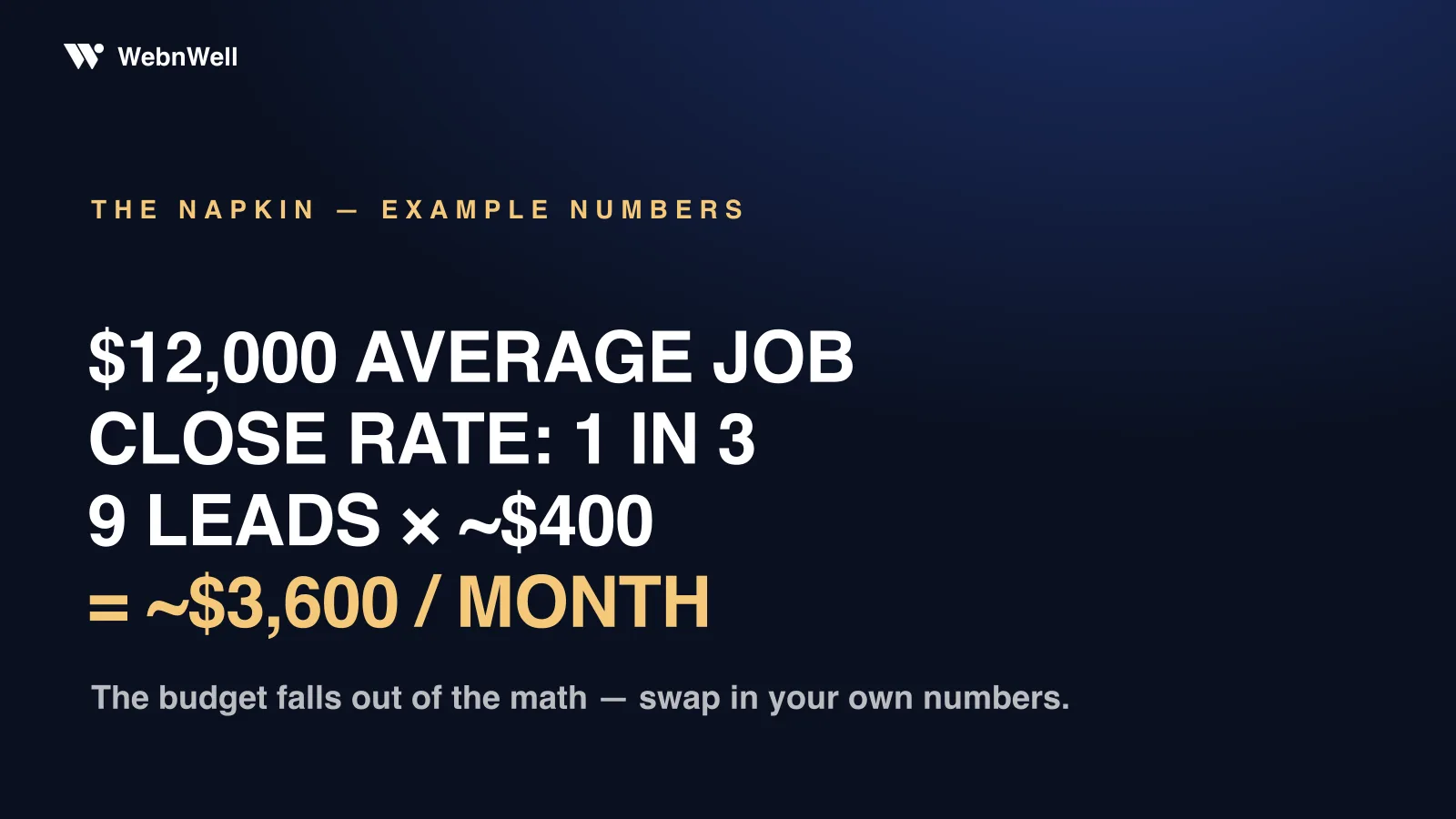
Say your average structural job is $12,000, and you’re comparing ten shared leads against six exclusive leads from your own ads in the same month.
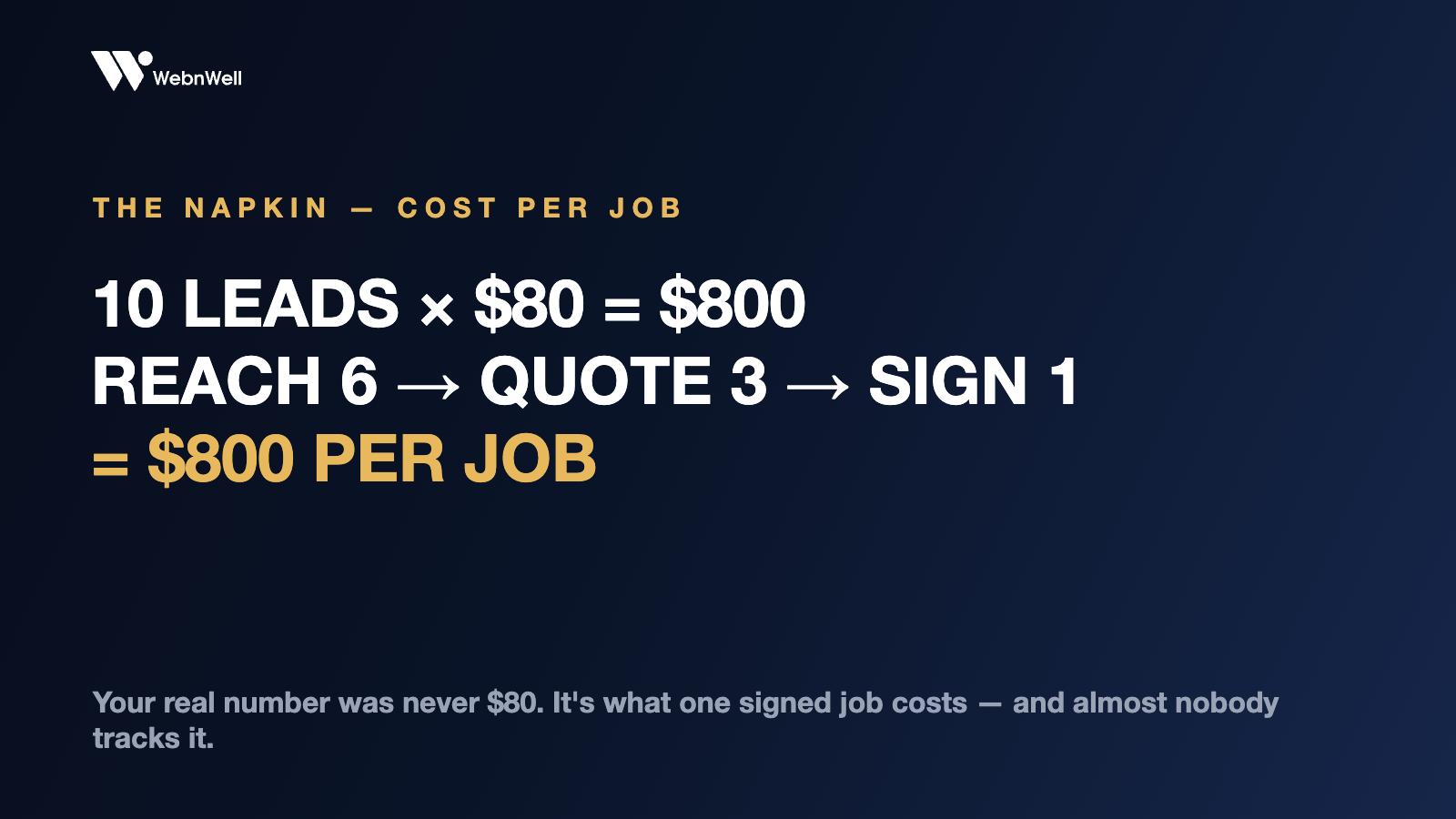
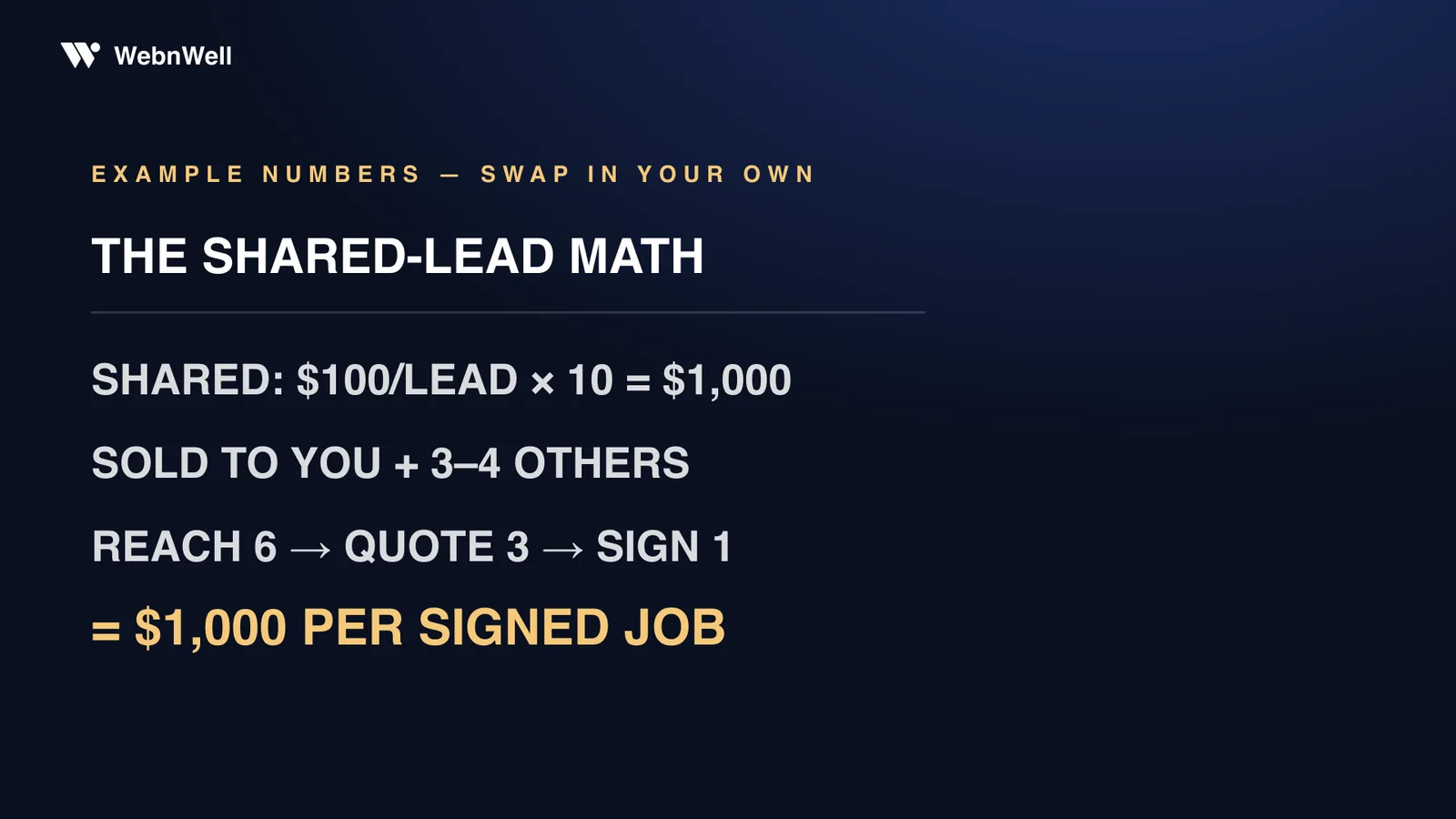
Start with the shared side. Ten leads at $100 each is $1,000. But those ten got sold to three or four other companies too, and you’re calling back from a jobsite. Realistically you get six on the phone, quote three, and sign one:
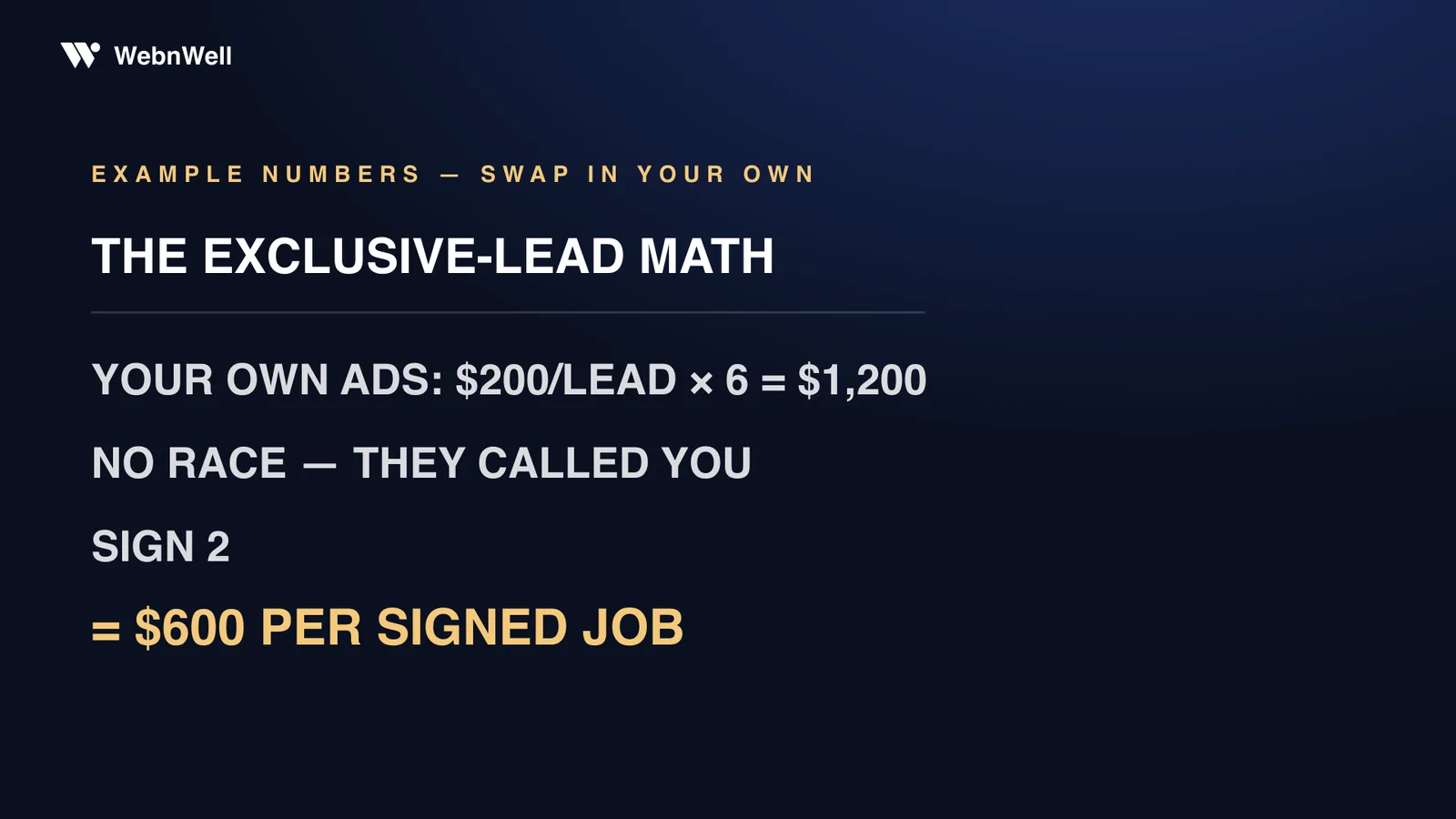
Now the exclusive side. A lead from your own ads costs $200. Double, and that scares people off. Six leads is $1,200. But there’s no race: she saw your name, she called you. Nobody else even knows she exists. You close one in three, so that’s two signed jobs:
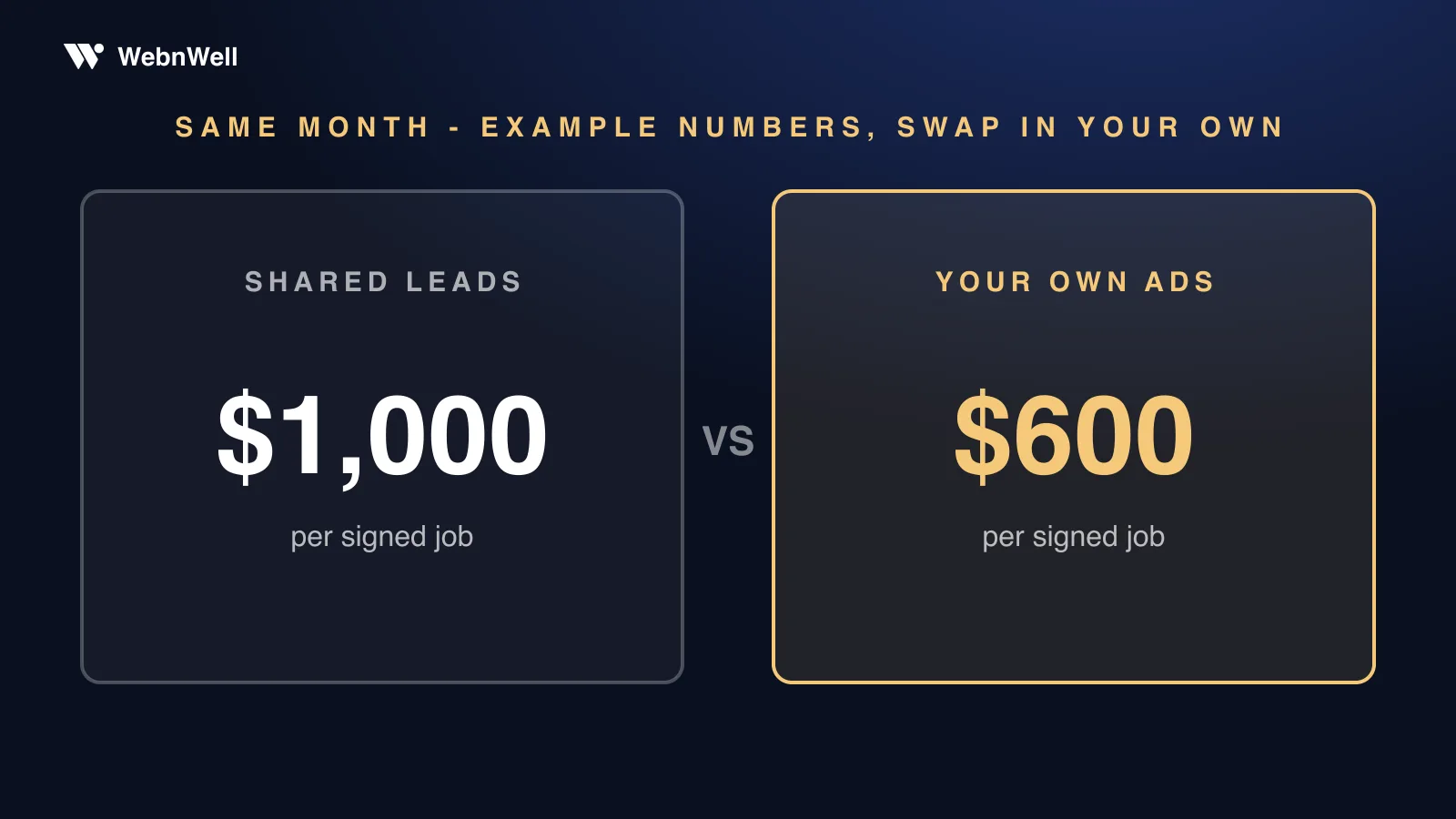
Side by side, the whole comparison looks like this:
| Shared leads (example) | Exclusive — your own ads (example) | |
|---|---|---|
| Sticker price per lead | $100 | $200 |
| Leads that month | 10 | 6 |
| Total spend | $1,000 | $1,200 |
| Who else got each lead | 3–4 other companies | nobody |
| Homeowners you get a real conversation with | ~6 | ~6, and they called you |
| Estimates given | 3 | 4 |
| Jobs signed | 1 | 2 |
| Cost per signed job | $1,000 | $600 |
Read the table from the bottom up. The lead that cost twice as much per unit produced jobs at close to half the price, because none of them were races, and the homeowner had already chosen you before she picked up the phone.
The table is kind to the shared column, too. It doesn’t count the hours you spent chasing the nine leads that went nowhere. It doesn’t count quoting against four competitors who all know they’re in a knife fight, which is exactly the setup that pushes estimates down. And it doesn’t count what it does to your week to keep paying for homeowners who already booked someone else.
Judge every lead source on one number: cost per signed job. Price per lead is how the lead vendors want you to shop, because it’s the only column where they win.
Your numbers will differ. Count them.
Don’t take my example’s word for it. Pull your last 30 purchased leads and mark three things next to each: reached, quoted, signed. Divide what you spent by the signed jobs. That’s your real cost per signed job, and ten minutes with a job log beats any table on the internet, including mine. Tracking money all the way through to actual sales is the same habit that let one of our dental clients trace over $1.1M in sales back to their ads. Not a foundation company, but the habit transfers to any trade with a phone.
And if your shared-lead math holds up (reached fast, quoted often, profitable per signed job), keep buying. Some owners with a dedicated phone person make it work. Just make the call from the signed-job number, not the sticker.
“Exclusive” is about ownership, not a higher price
Some lead vendors, sensing the mood, now sell an “exclusive” upgrade: same form, one buyer, higher price. Better than shared, sure. But you’re still renting. It’s still their ad the homeowner clicked, their brand she trusted, their form she filled, their rules on what counts as a junk lead you can get refunded. If their prices or priorities change next quarter, your lead flow is a line on someone else’s spreadsheet.
Real exclusivity is a different animal. The homeowner searched, saw your company’s name on the ad, landed on your page, and called your number. There’s no resale pool because no pool ever existed — she wasn’t collected and passed around. She found you.

Three tests, and they’re all ownership questions:
- Whose name is on the ad? Search your own services in your own city and look. Some of those “local” ads are lead vendors wearing a contractor costume.
- Whose website does the click land on? Yours, or a form page that collects homeowners?
- Whose phone rings? Your business line, or a tracking number that routes wherever the vendor points it?
When we built exactly this setup for a roofing contractor (different trade, same shared-lead headache), the account produced 61 exclusive leads in the first 30 days at a 25% lower cost per lead, with zero shared leads in the mix. The mechanics don’t care whether the truck says roofing or foundation repair.
One more ownership question worth asking any agency while you’re at it: who owns the ad account? At WebnWell the client does, always. If you ever leave, the account, the data, and the lead history leave with you.
“Exclusive” isn’t a price tier. It’s ownership. Your name on the ad, your page behind the click, your phone ringing. Nobody can resell a lead that was never theirs.
The one question that sorts every vendor
Before you buy another batch of leads from anyone, ask: “How many companies receive this lead?” Ask for the answer in writing.
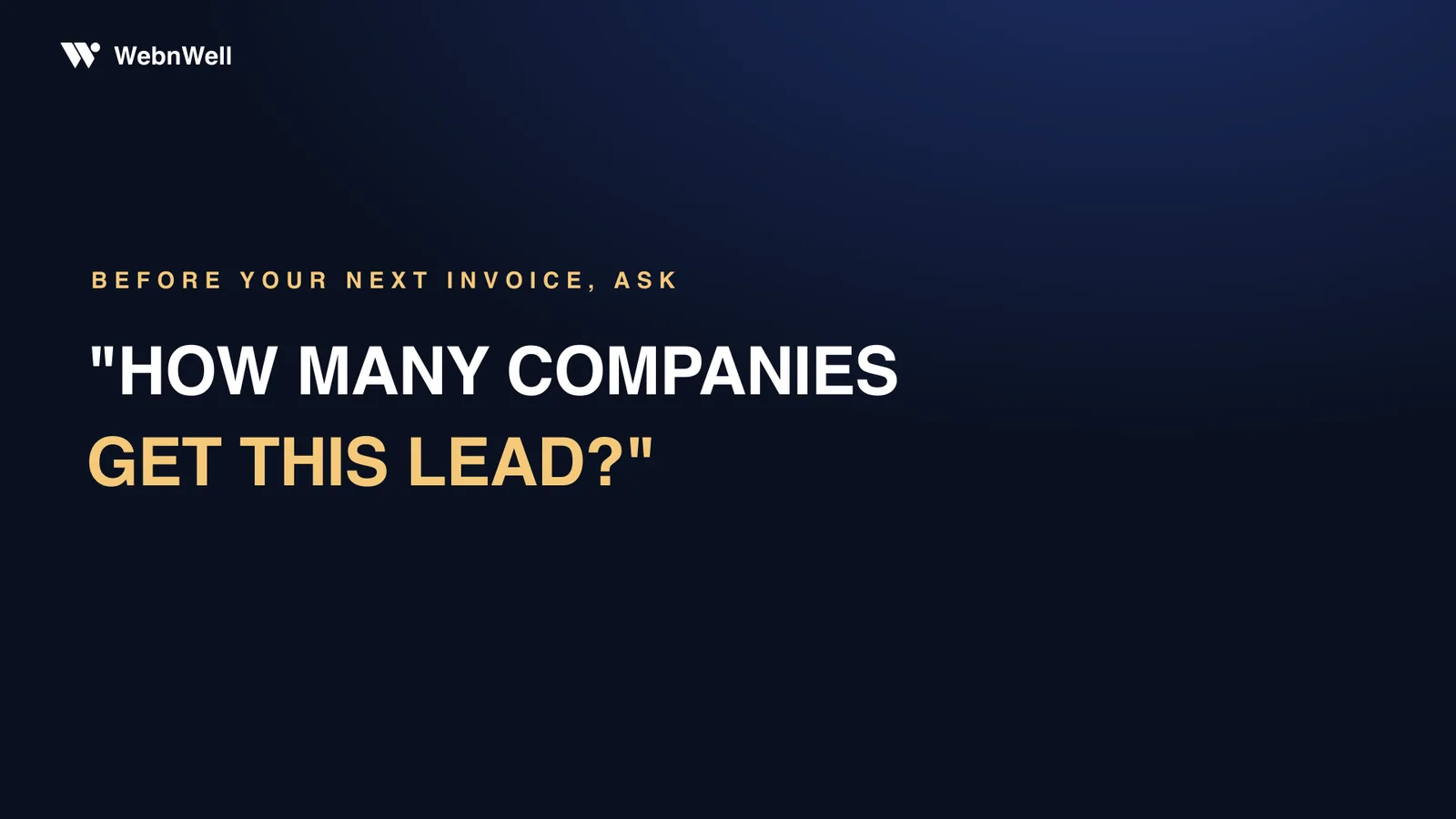
A vendor selling genuinely exclusive leads answers in one word. Everyone else starts explaining. The follow-up questions finish the sorting: What happens if I don’t respond within five minutes? How do refunds on junk leads work? Can I see where my leads come from? Fuzzy answers to plain questions are an answer too.
Run your own math before the next invoice
The whole article as homework, doable tonight:
- Pull your last 30 purchased leads.
- Mark each one: reached, quoted, signed.
- Divide total spend by signed jobs. That’s your true cost per signed job.
- Compare it against what a job is worth paying for. If you’ve never worked that out, the napkin method is in our Google Ads budget guide: job value, close rate, what you can afford per lead, five minutes.
- Decide with the signed-job number in front of you.
If the math says shared leads are working for you, you’ve lost nothing but ten minutes, and now you have a baseline to check every quarter. If it says what it usually says, then the dollars currently funding a lead vendor’s ad budget could be funding ads with your name on them instead. A lead source nobody can resell, because it was never anyone else’s to sell.
Where the free audit fits
If you’d rather see your market’s real numbers than my example ones, that’s what our free market audit is for: I record a video walking through your service area: who’s advertising foundation work, which ads are lead vendors in disguise, roughly what clicks cost, and what an exclusive-lead setup would realistically look like for your company. It lives on our foundation and waterproofing marketing page, it costs nothing, and the video is yours whether we ever work together or not. Worth knowing before you ask: we take one foundation or waterproofing contractor per service area, so if your market’s open, it’s open until someone claims it.