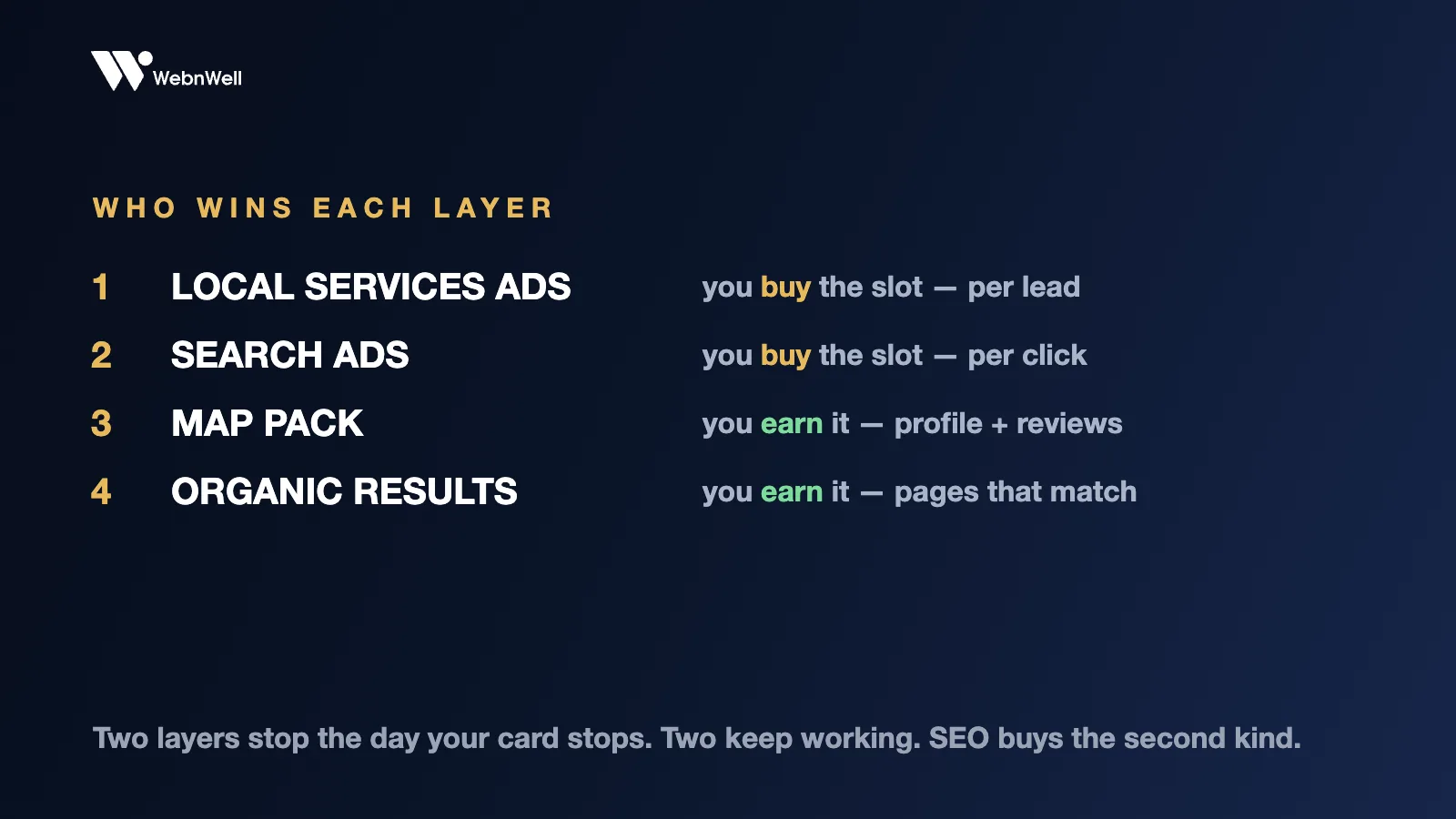

Page one for foundation repair in a big metro (Dallas, Kansas City, Nashville, take your pick) looks like a healthy local market: five or six local-looking brands, crew photos, “family owned” somewhere on most of the homepages.
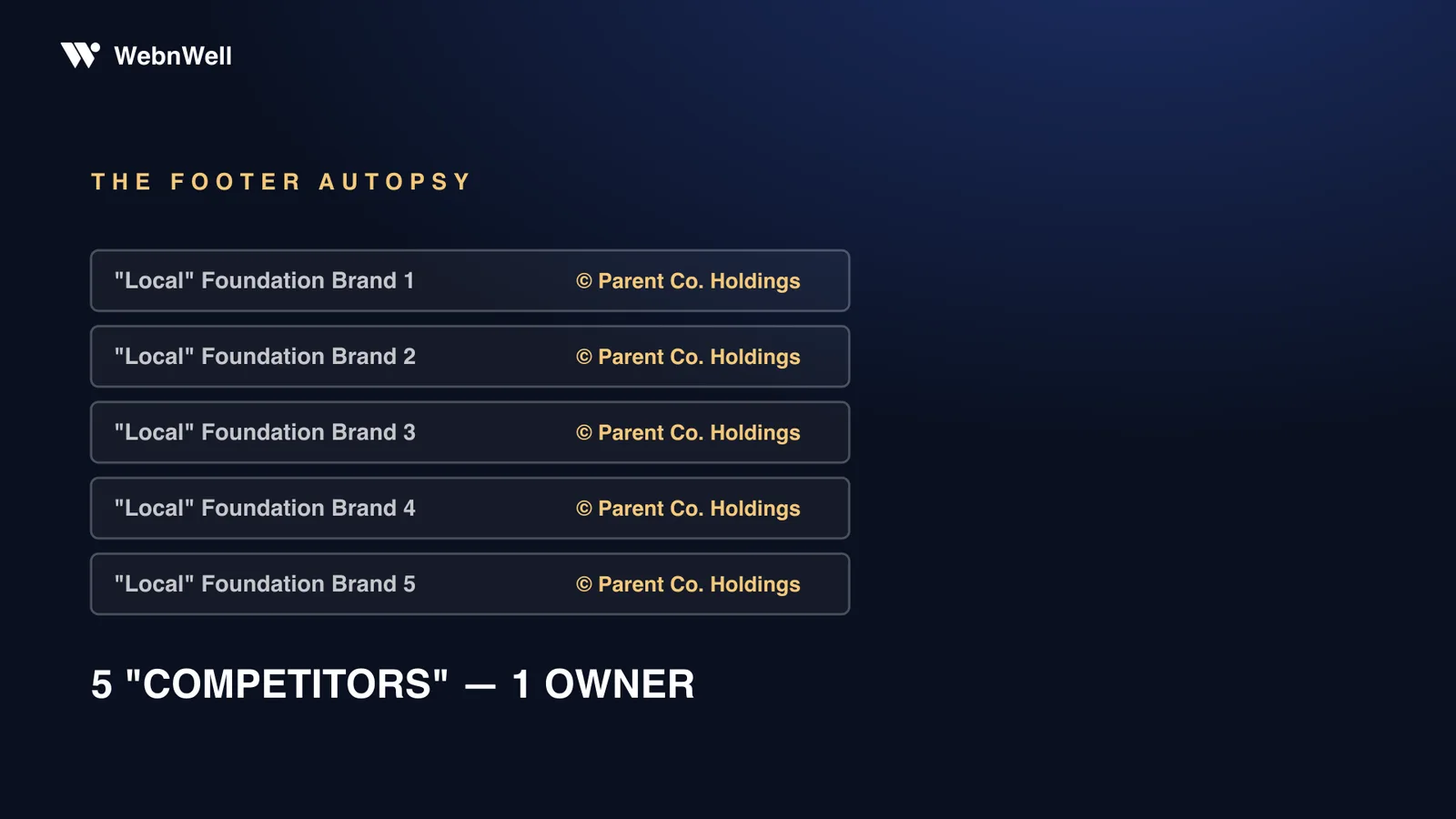
Run the paperwork check that almost no homeowner runs (footers, copyright lines, privacy policies, where the careers links point) and in a growing number of markets, several of those “competitors” resolve to the same parent company.
Five brands. One owner. A wall, painted to look like a marketplace.
The biggest of the buyers is Groundworks, a private-equity-backed company that has been acquiring once-independent foundation and waterproofing businesses across the country; the local brand names usually stay on the trucks after the sale. They’re not alone, either; consolidation is working its way through the trades generally, and foundation repair, with its high tickets, scared buyers, and fragmented local markets, is exactly the kind of niche the money likes.
A quick note on who’s talking: my name is Monzurul, I lead the business side at WebnWell, and the 1,400+ Google Ads campaigns we’ve run for local service businesses are where everything below comes from. Lately I keep getting the same question from contractors in different words: how do I compete with large foundation repair companies when one of them buys its way into my market?
Here’s the honest answer. You don’t beat them at their game. You make them play yours.
What our own audit says about who is actually winning
Before the tactics, a number, because the premise deserves testing rather than assuming.
We audited 3,539 foundation and waterproofing websites across the US and Canada for State of Foundation Repair Websites 2026. One thing we can check directly is who holds the best-built site in each market.
Restricting that to the 35 markets where we audited at least 25 sites, so a single company cannot swing the result:
- Groundworks-branded sites hold the top spot in 9 of them.
- Other multi-location brands and franchises hold 7.
- Independents hold the other 19.
So consolidators are a real presence at the top of this trade, in roughly two markets in five. They are not dominant. In most substantial markets the best-built foundation repair website still belongs to an independent company.
Two honest caveats, because this is our own data and you should know where it is soft. “Best-built” here is a technical score — speed, mobile, contact paths, trust signals, structured data — not a judgement about the business or the workmanship. And the scale saturates: 34 of those 35 markets have a site scoring a perfect 100, with ties broken by review count.
That second caveat is the useful part. A perfect technical score is not a moat. It is a checklist that a good local company can finish in a few weeks, and in 34 of 35 markets somebody already has. When the websites are technically level, the thing separating the top sites is reviews, which is precisely the ground where a local operator with two hundred neighbours as customers should win.
The roll-up’s advantage was never the website. It is the ad budget, and that is the one fight to decline.
Why matching their budget is the one guaranteed loss
The natural instinct when a roll-up shows up is to fight fire with fire. They’re everywhere, so you try to be everywhere. They’re clearly spending big, so you stretch to spend bigger than you should.
That’s the one move that reliably loses, for a simple reason: the money behind their ads is pooled capital deployed across dozens of markets at once, and a corporation like that can run your metro at a loss for longer than you can stay solvent trying to match it. If the contest is “who can buy the whole metro,” it’s over before it starts. They know that. It’s the whole point of the wall.
But the metro view hides something important about how Google sells attention.
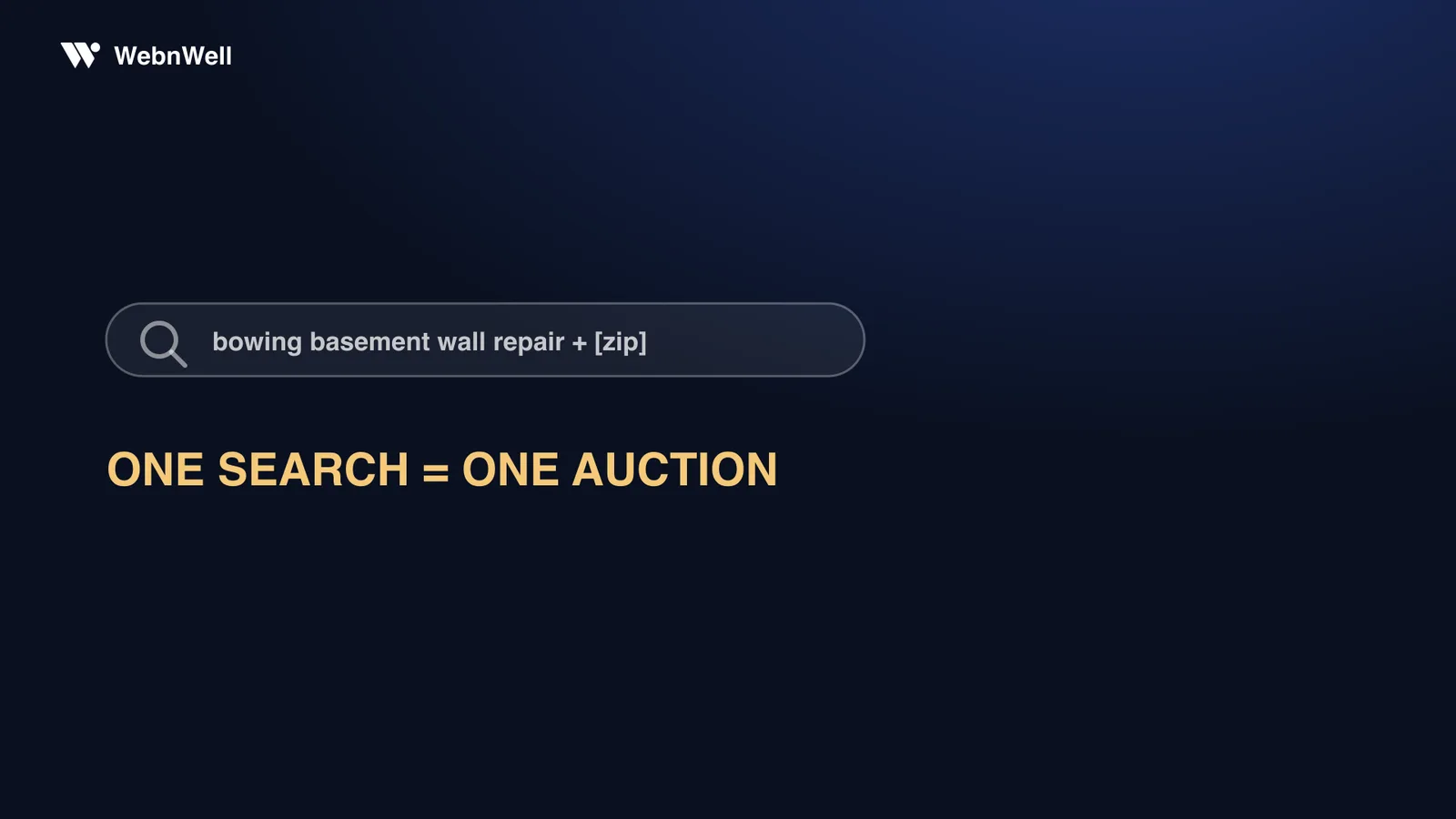
Google doesn’t sell metros. It sells one click at a time: one search, one auction, one homeowner. Nobody wins a city. They win individual auctions, and you get to choose which auctions you enter.
When a homeowner in one specific zip code searches “bowing basement wall repair,” the only budgets that matter are the ones showing up for that search. A giant budget spread across forty zip codes and six service lines is thin at any single point. And thin is beatable. Your money doesn’t have to beat their money everywhere. It has to beat it somewhere, and you pick the somewhere.
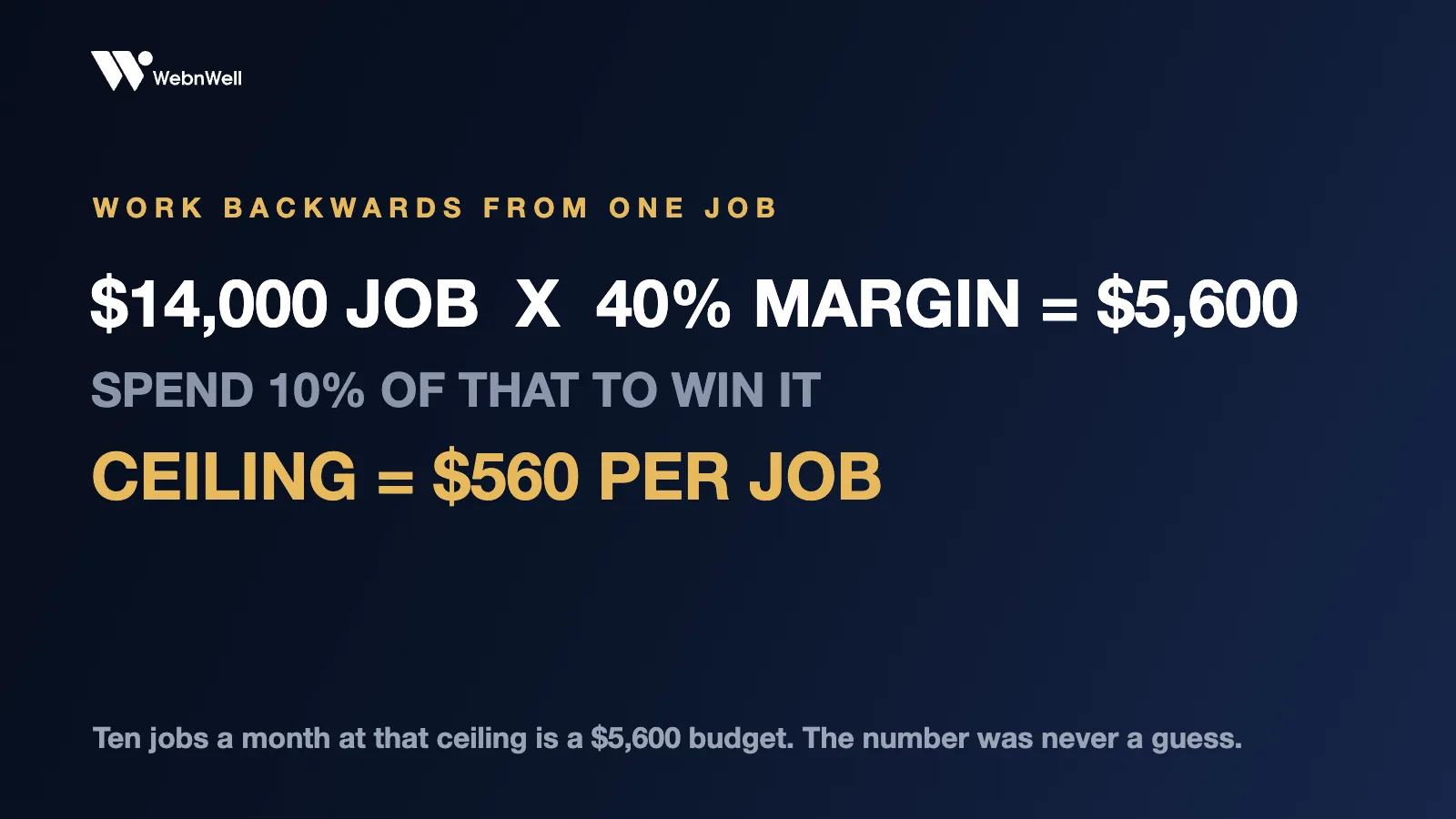
That also means your budget should come out of your own math (job value, close rate, click cost), not out of panic about theirs. We’ve written a full napkin-math guide to setting a Google Ads budget if you want the method; the short version is that a budget set by looking sideways at a competitor is a guess wearing a spreadsheet.
What can’t a roll-up do, at any price?
Spend is the thing they have and you don’t. It helps to be just as clear about the reverse list: the things you have that no acquisition budget can buy. There are three, and they’re structural.
The owner is the product
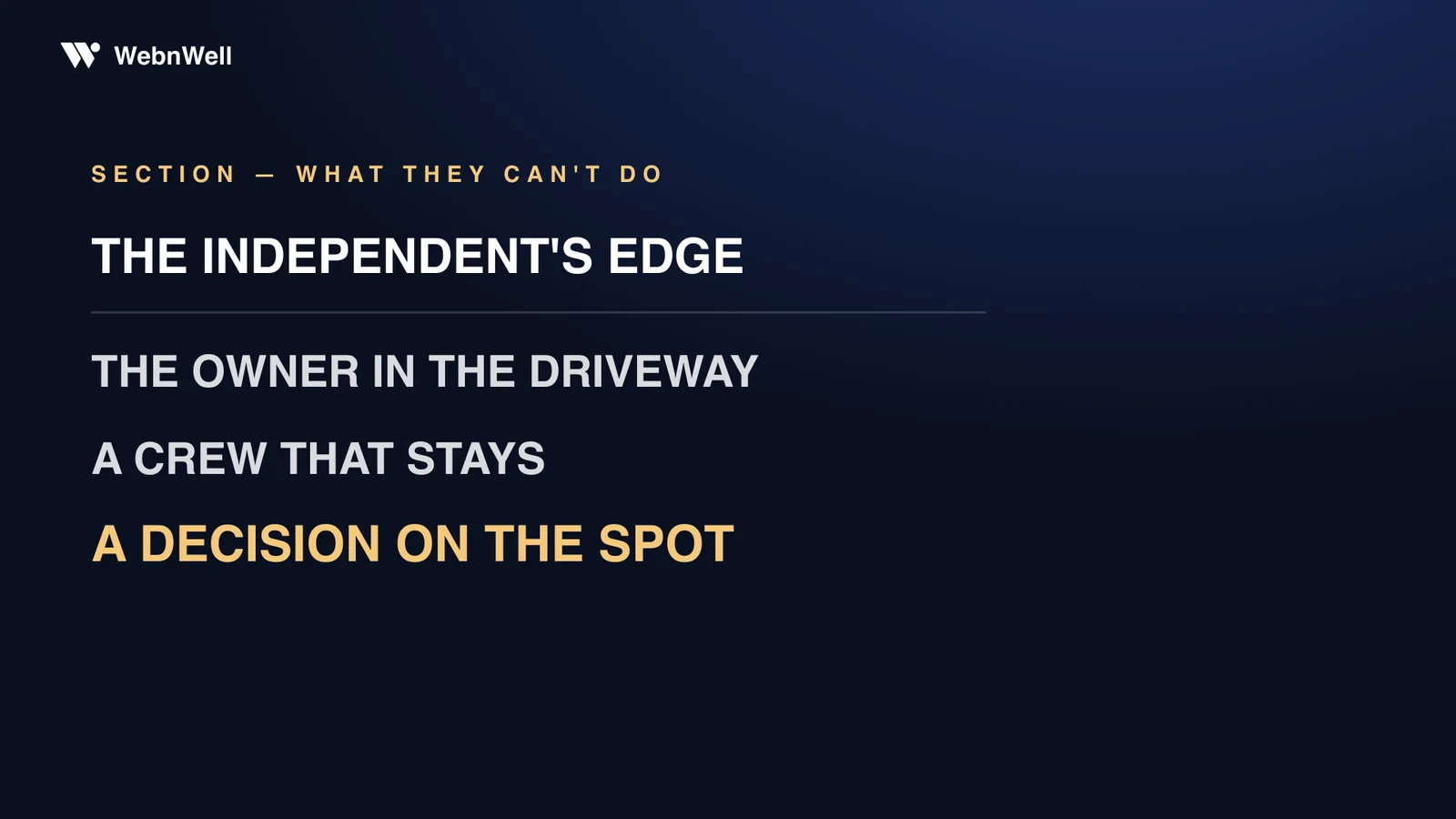
At most big outfits, the person standing in the homeowner’s driveway is a sales rep, typically paid on commission, working a quota, trained on a pitch deck. He might be good. He might be gone next quarter.
You can be the owner in the driveway.
Think about what a foundation repair purchase feels like to the person answering the door. It’s five figures, it’s invisible once it’s buried, and it’s bolted to the house her family lives in. She’s deciding who to trust, not comparing pier specifications. “The owner came out himself, walked me through it, and his name’s on the warranty” beats a polished stranger more often than any ad budget can correct for. No commission plan has an answer for that.
A crew that stays
Roll-ups run on acquisition. Acquisition means integration: brands renamed, managers rotated, crews churned, the truck in the driveway wearing a different logo than it wore two years ago. No scandal in any of it; consolidation simply works that way. But it means the company a homeowner researched and the company that shows up can be different animals.
Your foreman has been your foreman for years. Your reviews describe crews that still work for you. That consistency reads as safety to a nervous buyer, and it’s yours for free.
A decision made on the spot
You can adjust a price in the driveway. Squeeze an inspection into Friday because the homeowner’s closing on a sale. Make a warranty call on the spot, because the person with authority is the person standing there. At a roll-up, that decision often lives three approval levels up, in another state. For a homeowner mid-crisis, speed and flexibility are frequently the deciding factor.
Teach homeowners the warranty question
The roll-ups’ favorite pitch is the long warranty: twenty-five years, lifetime, transferable. It sounds like the one thing a big company can promise that you can’t.
Turn it around. A warranty is only as durable as the entity behind it, and the entire roll-up model is built on entities changing hands. The local brand that issues a warranty this year may be renamed, merged, or folded into the parent by the time anyone needs to invoke it. Maybe the paper gets honored smoothly. Maybe it becomes a phone tree.
So teach your market one question. Put it on your warranty page, say it in your inspections:
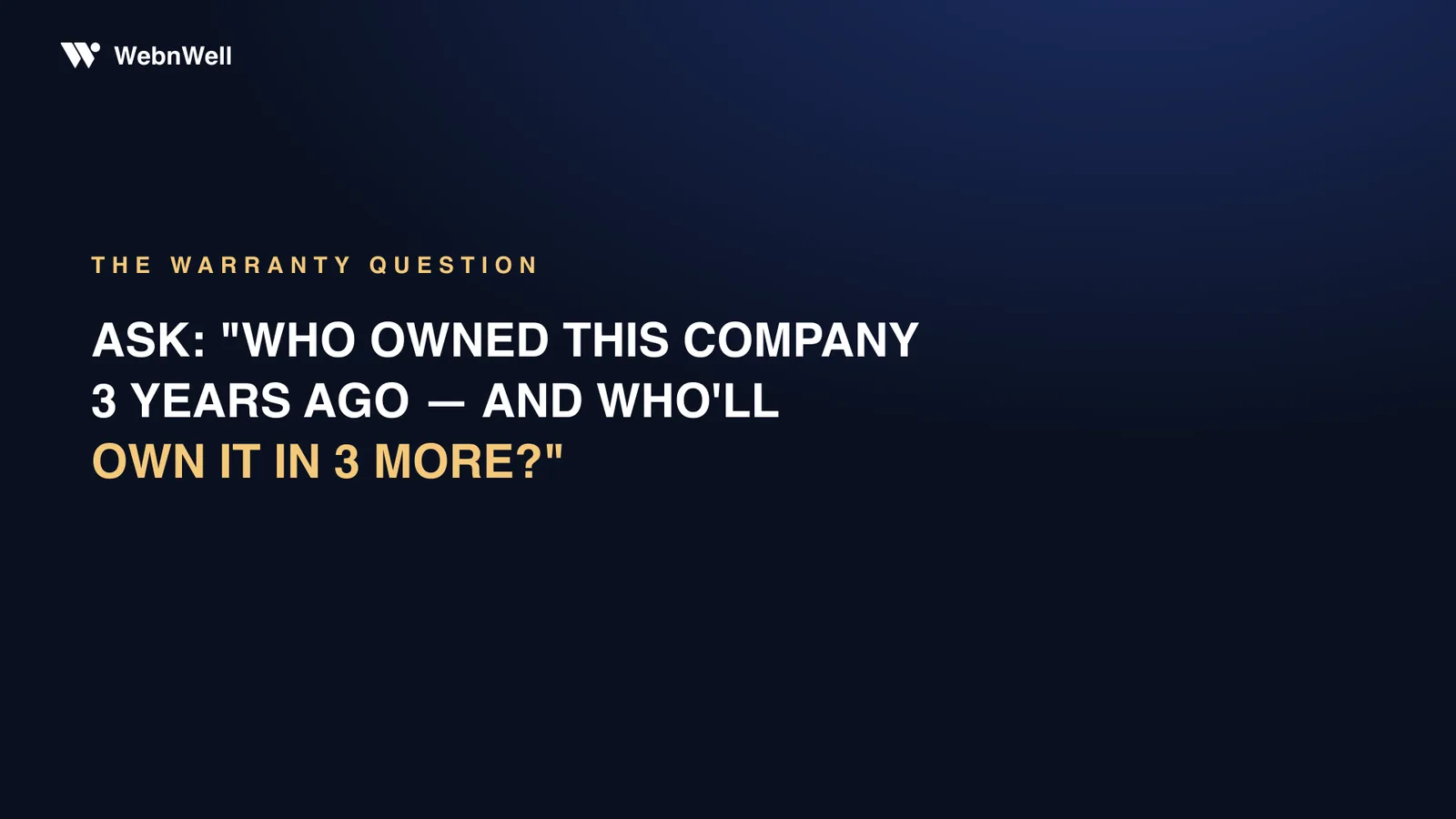
“Who owned this company three years ago, and who will own it in three more?”
You can answer that question with your own name. When the guy across town can’t, the homeowner notices, and you never had to say a bad word about anyone. You just asked a fair question about continuity, in an industry where continuity is exactly what’s being bought and sold.
Pick your ground: best services times best zip codes
Now the practical core: where to point your ad dollars when you can’t cover the map.
The move is concentration. Not “foundation repair, everywhere we’ve ever driven a truck,” but your most profitable one or two services in the handful of zip codes where you close best, know the soil, and have the review base. Here’s a worked example of why that wins. Treat the dollar figures as stage props, picked round so the ratio is easy to see, and rerun the arithmetic with your own budget and your own map before acting on it:
| The roll-up (example) | You (example) | |
|---|---|---|
| Monthly ad budget | $60,000 | $6,000 |
| Zip codes covered | 40 | 6 |
| Service lines advertised | 6 | 2 |
| Budget per zip, per service | $250 | $500 |
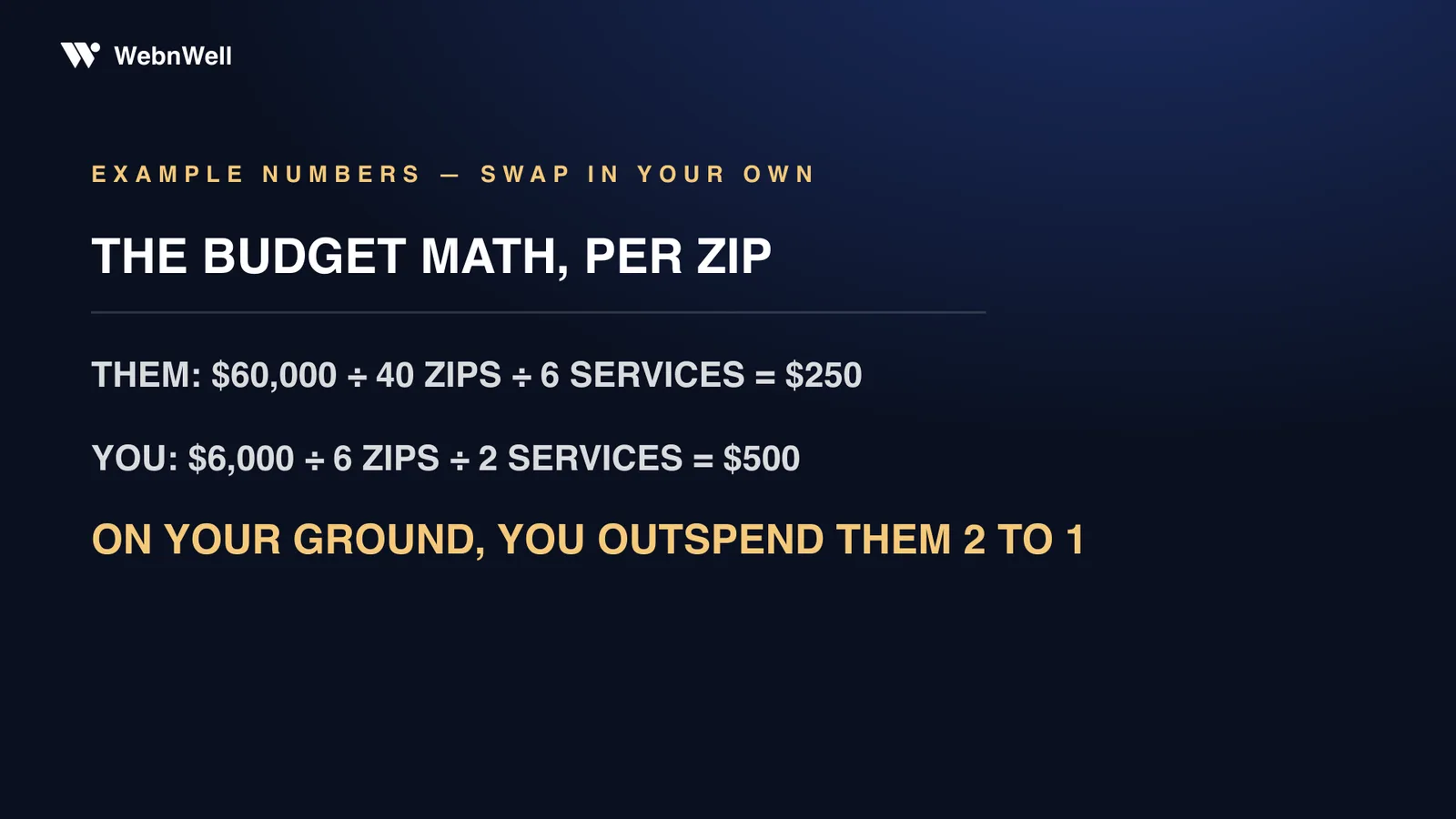
A tenth of the budget, and on the ground you chose you’re the heavyweight, two to one. That’s before quality even enters the picture, and quality tilts things further. Google’s auction rewards relevance: a “bowing basement wall” ad pointing at a bowing-wall page, with photos of your crew and reviews from that town, tends to earn cheaper clicks and better positions than a metro-wide campaign dumping every search onto one corporate template. Concentration doesn’t just match their spend locally. It buys more per dollar.
This is the same principle we lean on in every trade, not a foundation-specific trick. In the accounts we’ve tracked over the years, tightly focused campaigns beat sprawling ones on cost per lead far more often than the reverse. The physics hold across trades: focused beats broad when broad is spread thin.
And the discipline cuts both ways. Outside your chosen ground, let them have the clicks. Watching a competitor’s ad run unopposed in a zip code you deliberately released feels wrong the first month. It’s also what winning on purpose looks like.
Your first three moves when the roll-up shows up
Say the acquisition just hit your market: one of the local names sold, the ads are everywhere, and your phone’s a little quieter than it was. In order:
1. Shrink your map before they shrink it for you. Pull your job history and find where your money comes from. Most owners who do this discover a large share of profit lives in a small cluster of zip codes and one or two services. Rebuild your campaigns around that cluster and pause the rest. This is a two-week project, not a rebrand.
2. Put your face on everything. Owner photo on the homepage. A warranty page with your name and your years in the market, with the continuity question sitting right there. Review replies signed by you, not by “The Team.” Each of those puts the one asset they can’t acquire onto a page a nervous homeowner will read.
3. Tighten the machine. Concentration buys you fewer, better leads, which makes each one precious. So answer fast, every time, including from under a house. Speed to lead decides more jobs than ad budgets do, and it’s the cheapest fix on this list. Same energy on reviews: ask after every single job, because their locations post-acquisition will wobble before they stabilize, and a steady stream of fresh, local, owner-answered reviews is a scoreboard money can’t rush.
None of these moves requires outspending anyone; each one runs on ground the roll-up can’t buy.
Where the roll-ups are weak in your zip codes
That’s the question our free market audit is built to answer. I map your metro and mark which services and which zip codes the big players are ignoring near you, plus who’s really behind the “local” names on page one and what the clicks cost, and record it as a video about your business. Fair warning on timing: we only ever take one foundation contractor per service area, no exceptions, so if a roll-up is already circling your city, the open spot is worth claiming before someone else does. It starts at our foundation marketing page.